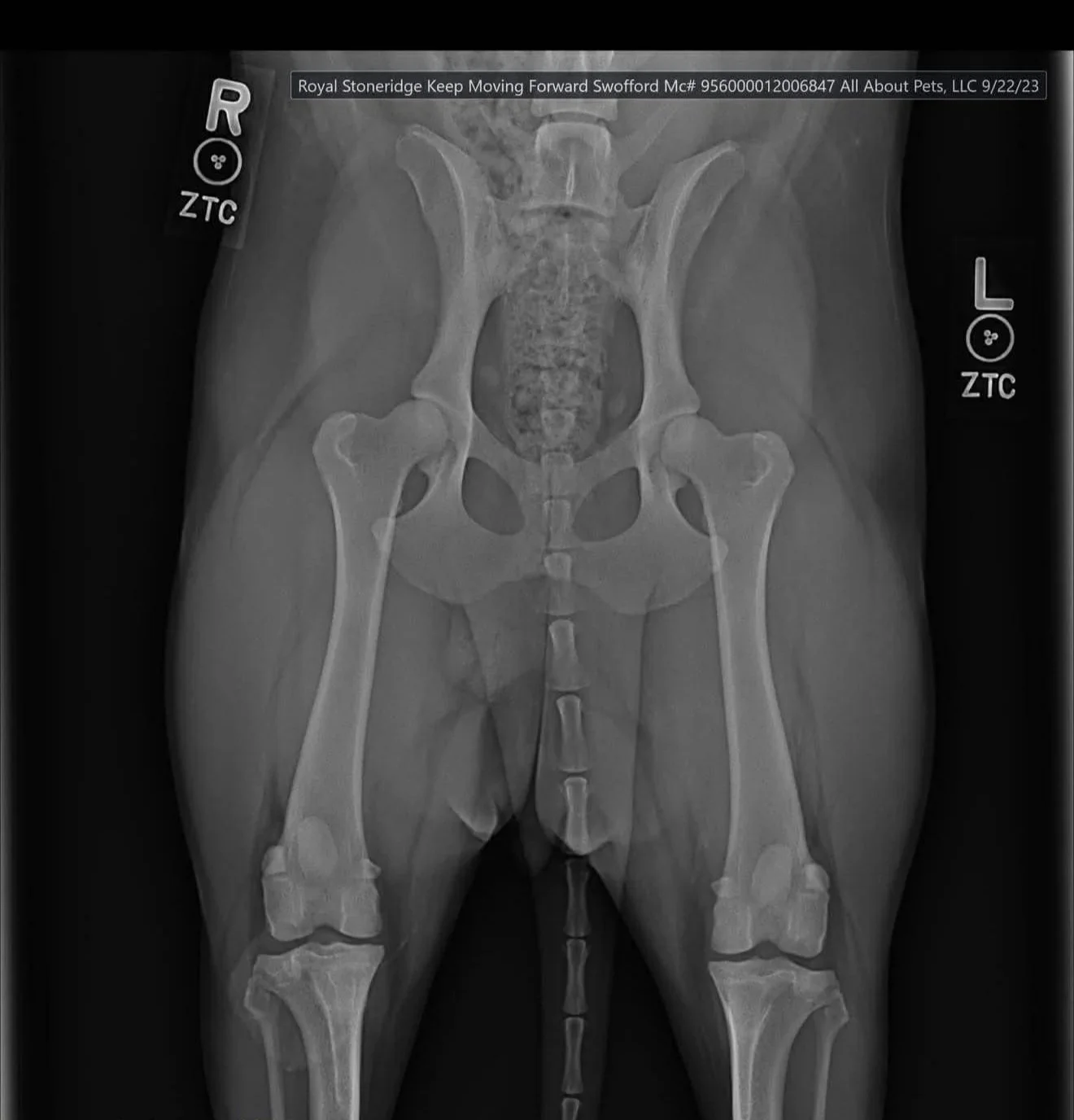
Hip Dysplasia
Summary: Hip dysplasia is a degenerative condition that is identified by shallow hip sockets and abnormal ball joint conformation which may result in osteoarthritis and lameness. In this disease, the femur head grinds against the socket of the pelvis causing bony changes and pain when the joint is used. Hip dysplasia can result in symptoms such as limping, trouble standing up or laying down, and “bunny hopping”. Both surgical and supportive care options are available and treatment options should be discussed with a veterinarian.
Screening: Available in two common forms in the U.S.: OFA and PennHIP, both of which use radiographs (x-rays) to measure the conformation and risk factors of the hips for dysplasia using a variety of measurements such as conformation evaluations and degree of laxity in the joint (In other terms, how well the joints are formed and if there is any space or flexibility in the joint that should not be there)
Inheritance: Polygenic (multiple genes involved - complex inheritance) Genetic with influences from environmental factors such as weight and nutrition.
BCSA recommendations: Hip Dysplasia should be screened for at age two or older before breeding is considered. Ethical breeders should have hip evaluations for both sires and dams.
OFA Hip Grade Details
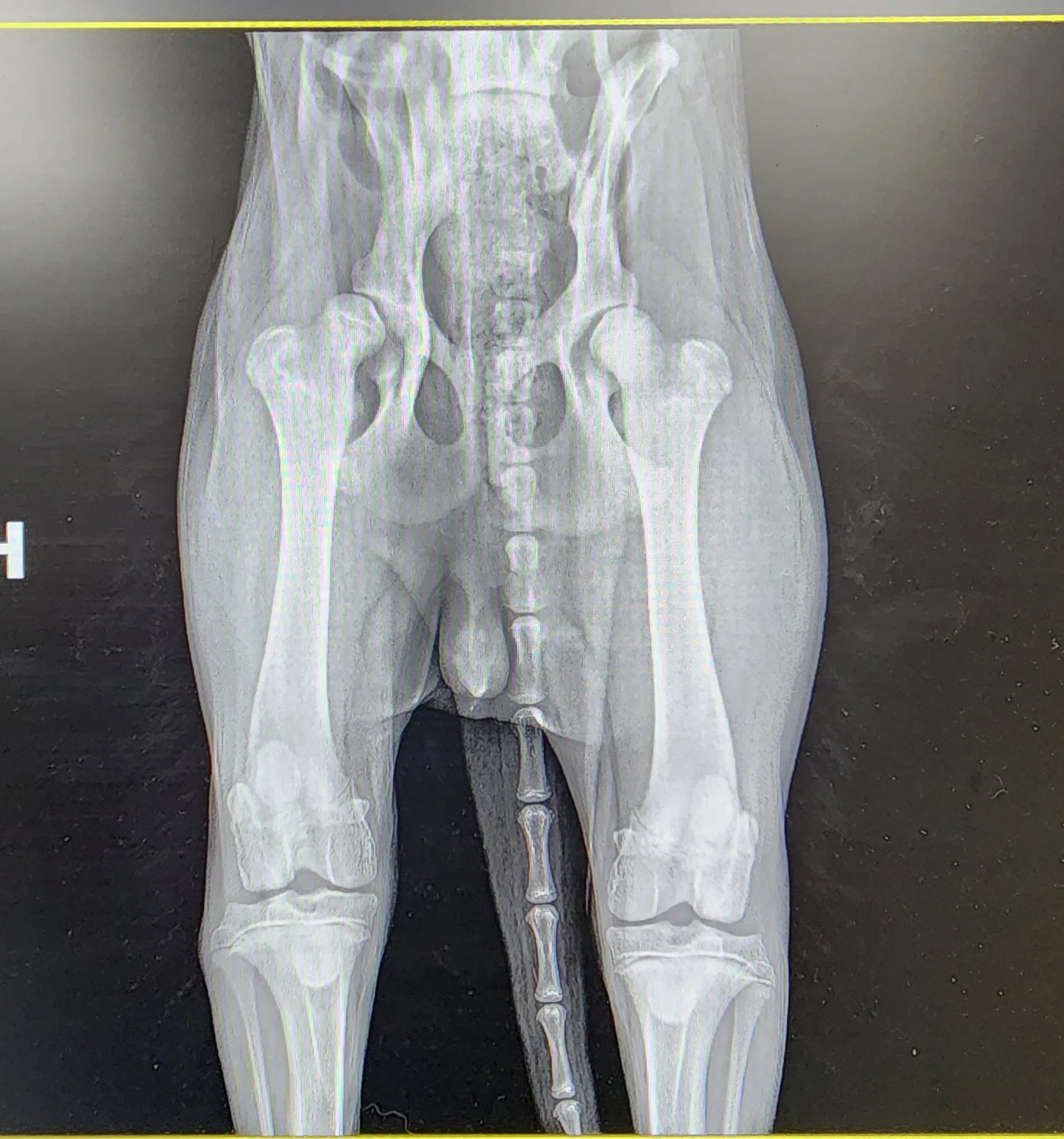
OFA Hip Evaluations are usually the most common used in the United States
Click on this link for a full explanation of what OFA hip evaluations mean and the different levels of dysplasia.